How to Post Clips on TikTok and Get Reach
Step-by-step guide to publishing your clips on TikTok with the right captions, hashtags, and format — giving the algorithm what it needs to deliver reach.
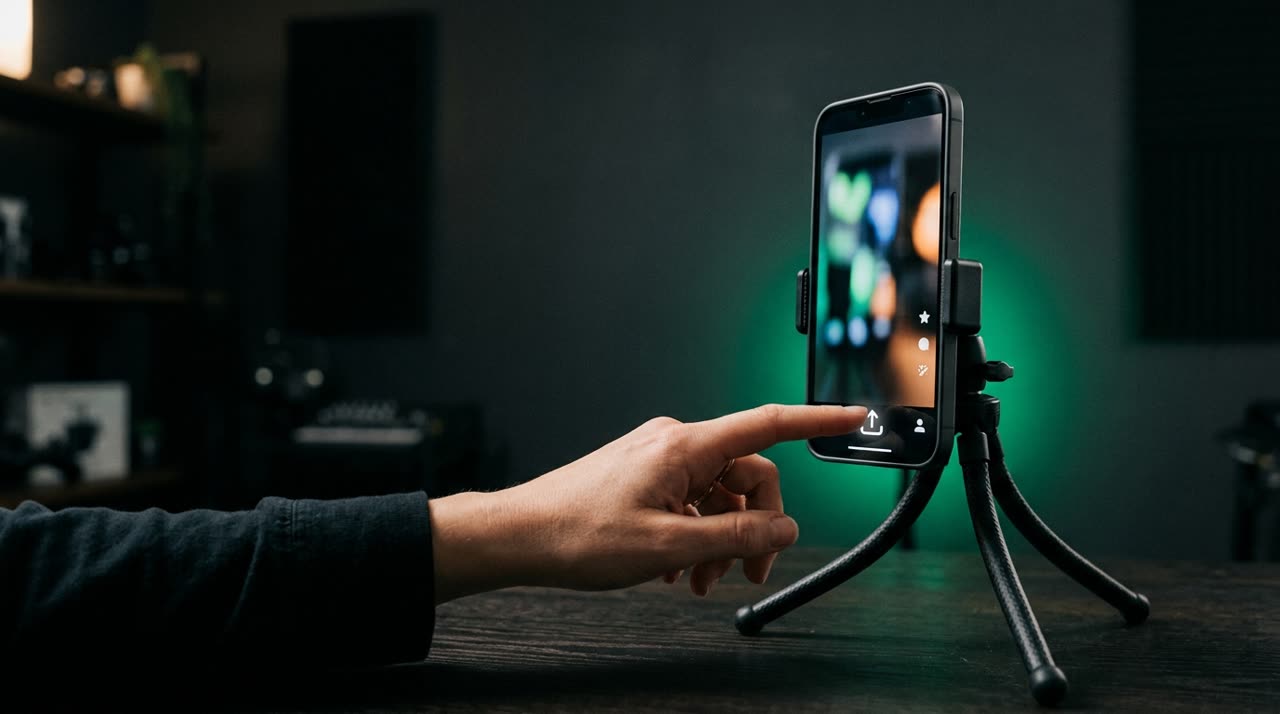
How to Post Clips on TikTok and Get Reach
Cutting the video is only half the job. The other half is posting it. Knowing how to post clips on TikTok correctly — format, caption, hashtags, and timing — makes a big difference in how much the algorithm delivers. A great clip with a careless post might die at 200 views; the same clip posted thoughtfully can get real reach.
This guide is practical. It’s for anyone coming from a live stream, podcast, or sermon who wants to turn that into multiple short videos TikTok wants to show.
Before Posting: Your Clip Needs to Be Ready for Vertical
TikTok is 9:16, full screen. A podcast clip recorded in 16:9 and posted with black bars top and bottom already starts at a disadvantage. The algorithm reads full screen as native content.
Three things solve most of this before you even open the app:
- True 9:16 format, not a squeezed 16:9 in the middle of the screen.
- Burned-in captions on the video — most people watch without sound in the first few seconds.
- Framing on the speaker’s face, so they don’t get cut off when the video turns vertical.
Picotta delivers this ready to go: the face reframe follows whoever’s speaking when switching to 9:16, the clean cuts remove pauses and silences (the video already has rhythm), and automatic captions are embedded. If you want to understand the logic behind a clip that holds viewers, check the guide how to make viral clips for hooks and payoff.
The Hook in the First 3 Seconds
TikTok decides quickly whether to keep showing your video. The biggest signal it reads is retention — how many people don’t swipe away right at the start.
- Start with the strongest sentence, not the intro. Cut out "hi, welcome."
- Use a text hook on screen in the first seconds ("he didn’t expect this answer," "this changed my business").
- If the clip has a twist, make it clear — but don’t give it all away in the first line.
When generating clips, Picotta can apply an automatic hook (AI suggests) or you can write your own. A good hook is the difference between a viewer staying 2 seconds or 20.
Post Caption: What to Write in the Text Field
The TikTok caption (the text below the video) has two functions: give context and encourage interaction. A few lines are enough.
- A sentence with context or a provocation. "He solved in 40 seconds what I tried all year."
- A question when it makes sense — comments matter a lot to the algorithm.
- Avoid walls of text. Nobody reads long captions on TikTok.
Each clip generated in Picotta comes with a "ready to post" kit: title, a caption suggestion, and niche hashtags — with tabs separated by platform (TikTok, Reels, Shorts). You copy and paste, adjust the tone, and post. No need to invent from scratch for each of the ten clips.
Hashtags on TikTok: How Many and Which Ones
Hashtags on TikTok aren’t about quantity, but about relevance. The goal is to help the app understand what the video is about and who to show it to.
| Type | Example | Role |
|---|---|---|
| Niche | #podcastbrasil, #personalfinance | define the topic (most important ones) |
| Format/platform | #fy, #viral | signal TikTok, but don’t carry alone |
| Trending | current week’s hot topic | ride the wave when it fits |
A good mix is 3 to 5 hashtags: mostly niche, one or two platform tags. Filling with 20 generic hashtags doesn’t help — it can even confuse distribution. The niche hashtags Picotta suggests come from the clip’s content, so they’re usually more accurate than a bunch of #viral.
Timing and Frequency
There’s no universal magic time, but there is your time — when your audience is online. TikTok shows this in account stats (professional profile).
- Post consistently, not in bursts. One clip a day beats ten at once and silence the rest of the week.
- A long video easily turns into 5 to 15 clips — fuel for weeks of posting.
- Repurpose: the same clip can go to Reels and Shorts with small tweaks. See TikTok, Reels, and Shorts: adapt your clips for each.
If you do live streams, you can close the whole cycle: Picotta has a live monitor (YouTube, Twitch, and Kick) that automatically cuts the best moments when the stream ends — you wake up with clips ready to post. Super useful for streamers, podcasters, and churches producing hours of content weekly.
Quick Checklist Before Hitting "Publish"
- Video in 9:16, full screen, no black bars.
- Burned-in captions readable and synced.
- Clear hook in the first 3 seconds.
- Post caption short, with context or question.
- 3 to 5 hashtags — mostly niche.
- Posted at the time your audience is online.
Where Picotta Helps (and Honest Comparisons)
Tools like OpusClip and Cut.Pro do a good job finding moments and captioning — we won’t pretend otherwise. Where Picotta stands out for creators in Brazil:
- Pricing in Brazilian Real, on card — no dollar conversion or surprises at month’s end.
- Live monitor that cuts automatically when the stream ends.
- Built-in face reframe and clean cuts, no extra editor needed.
- Visuals without the "AI look" on clips — clean captions and theme, not generic presets.
For a side-by-side comparison, see Cut.Pro vs Picotta and the overview of best AI clip generators in 2026. For agencies, the agencies page shows the workflow at scale.
Conclusion
Posting clips on TikTok that get reach isn’t luck: it’s vertical format, strong hook, readable captions, niche hashtags, and consistency. The clip carries the content; the post carries the delivery. Do both well and the algorithm works for you.
The heavy lifting — cutting, framing, captioning, suggesting captions and hashtags — Picotta handles, and you focus on what only you can do: choosing the message and hitting publish. Check out the plans, read more on the blog, and start picotting.
Pronto pra picotar o seu próximo vídeo?
Cole o link e receba cortes prontos pra postar. Grátis pra testar.
Comece a picotar →Sem cartão de crédito. Cancele quando quiser.